Sunday, April 23, 2017

Diada de Sant Jordi

Diada de Sant Jordi

 On a cultural note, on April 23, Catalunya celebrates the Diada de Sant Jordi (Feast Day of Saint George, patron of Catalunya)  and El Dia del Llibre (The Day of the Book) with many regional customs:  Book and flower stalls are set up along the streets of Barcelona. People will go looking for a gift for their their family, friends, and partners. You will be able to find the latest publications, see well-known artists signing copies of their books, and of course, smell the scent of the roses. Traditionally, boys will give girls a flower, and girls give boys a book.

The image on the right was taken today by a friend (@roser_n) and shared. It shows Gaudí's Casa Batlló, Barcelona, decorated with lots of roses. The facade of the building is said to resemble a drac (Dragon), and according to legend, Sant Jordi is said to have slain a dragon in his efforts to help the inhabitants of a city.

For more cultural details and video, click on the link https://www.casabatllo.es/en/saint-georges-day/

Friday, July 22, 2016

Templo de Debod

Templo de Debod

Templo
In January, I visited the magnificent Templo de Debod located in the Parque del Oeste in Madrid. Built in the 2nd century BCE in Upper Egypt by the Kushite king Adikhalaman, the structure constitutes one of the few examples of ancient Egyptian architecture outside Egypt. The Egyptian state donated the temple to Spain in 1968 as a sign of gratitude for Spanish assistance in saving architectural sites affected by the construction of the Aswan Dam.

Cityscape The Parque del Oeste, an urban green area developed in the early 20th century and expanded during the second half of the century, houses the Egyptian structures and provides an open space for these ancient temples.  The reconstructed buildings were open in July of 1972. The entrance to this site is free.

Columns A reflecting pool surrounds the Temple and highlights the differences between the modern Madrid surroundings and the ancient world that created these structures. Once inside, one can see various chambers, including chapels and crypts that give an insight into the rich complexity of ancient Egypt. Stunning ancient reliefs line some of the walls. And the columns that lead into the Osiris Chapel are impressive and a vital reminder of the cultural heritage of Egypt.
 

How to get there

The Templo de Debod is located on the Calle Ferraz, a short distance from the Plaza de España.

Entrance is free.

Hours 


Closed Mondays.

From Oct. 1 to March 3:
  • Tues. - Fri. --  9:45 to 13:45 & 16.15 to 18.15
  • Sat., Sun. and holidays -- 9:30 to 20:00
July 1 to Sept. 15:
  • Tues. - Fri. -- 10 to 14 & 18 to 20
  • Sat., Sun. and holidays -- 9:30 to 19:0

 Transportation: 

 By Metro: 

Plaza de España (lines 3 & 10) 

By Bus:

Line 74 (stop Calle Ferraz)
Lines 25, 39, 46, 75, 138 & C1 (stop Cuesta de San Vicente-Cadarso)
Lines 3, 44, 133, 148 & C2 (stop Plaza de España)
Lines 1, 2, 74 (stop Princesa-Ventura Rodríguez)

The site is not handicapped accessible.

A brochure is available. Click here.

Reflecting Pool
 

Sunday, July 10, 2016

Casa Golferichs

Casa Golferichs

Exterior
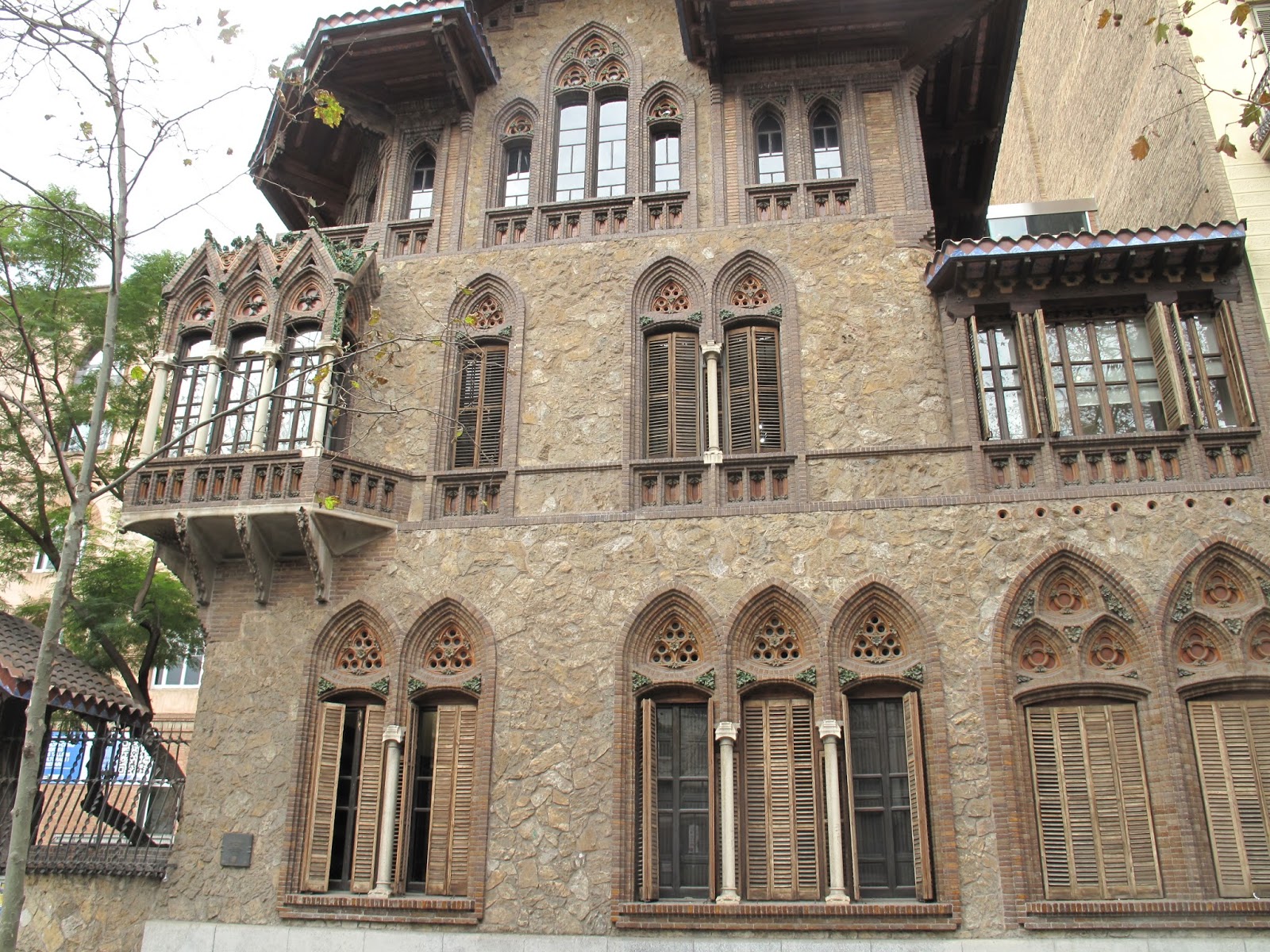
The Casa Golferichs sits on the Gran Via de les Corts Catalanes, one of the busiest boulevards in Barcelona. Built in 1901 by Macari Golferichs i Losada, a prominent figure in early 20th-century Catalunya and supporter of Modernisme aesthetics, the private residence was designed by the architect Joan Rubió i Bellver whose work was influenced by Gaudí. The building is affectionately known as El Xalet and houses a cultural center operated by Districte de l’Eixample.

TribunaThe structure came close to being demolished in the 1970s, but the Ajuntament de Barcelona decided to preserve the structure and to restore the building with the purpose of preserving its artistic and cultural significance. The building serves as the quarters of the Golferichs Centre Civic, which offers local residents a range of conferences and discussions, exhibitions and adult education courses, and organizes various thematic walking tours of the city.


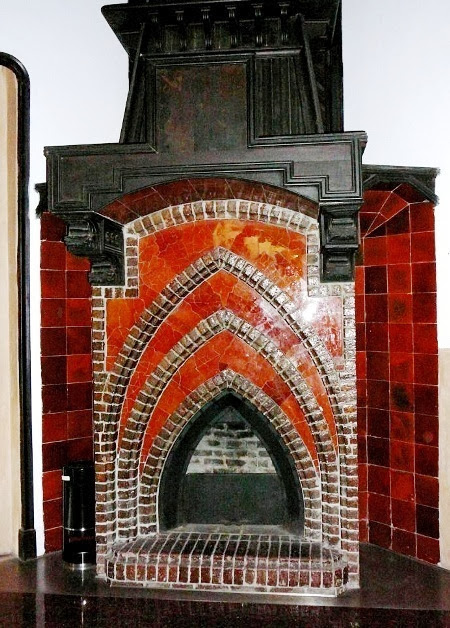
ChimineaStairsThe structure displays many of the quirky design elements associated with the Catalan modernista movement. The exterior elements of the house utilize masonry, ceramics, ironwork, and wood to give the structure a distinctive Neomedieval look. The eaves and roof of the house echo this medievalism. In its interiors, one also finds similar design tendencies, with ample use of ceramics tiles and ornate woodwork to evoke the medieval period.

MixturesIn a city full of spectacular examples of Catalan modernisme, this building offers an example of how this aesthetic was applied by other architects. Its restoration has preserved it for subsequent generations to enjoy.


How to get there


Address: Gran Via de les Corts Catalanes, 491 (corner of the Carrer de Viladomat)

Metro L1 (Urgell or Rocafort)
Bus 9, 41, 50, H12

Hours: 
Monday to Fridays, 10 am to 8 pm
Saturday, 10 am to 2 pm.

Plaque

Saturday, July 9, 2016

Búnquers at the Turó de la Rovira

Búnkers at the Turó de la Rovira


Vista


The Turó de la Rovira, situated in one of the mountains of the Carmel neighborhood near the Horta district, overlooks the city of Barcelona. The word la rovira refers to the oaks located along the mountain (Turó ). Although the city has spread across and below the sides of the mountain, the location of this park is high enough to afford a 360º panoramic view of metropolitan Barcelona. At 262 meters above sea level, one can see the urban expanse of Barcelona, from Montjuïc in the southwest to the coastal areas to the north. The blue waters of the Mediterranean forms a magnificent backdrop for this view of the metropolis. The views are breathtaking and spectacular.

Mountainside

The hilltop houses the remnants of an anti-aircraft installation and military observation complex built during the Spanish Civil War to defend the city from aerial attacks by the Nationalist forces of Franco. There are bunkers, gun turrets, observation areas, barracks, and the remains of other military installations. It was one of the four strategic installation for the defense of Barcelona during the Spanish Civil War. Later in its existence, the site also houses a shantytown known as "Los Cañones" until the 1990s.


Military structuresThe Museu d'Història de la Ciutat has developed this area as a heritage site with an exhibition space dedicated to the history and importance of these installations. The intent is to preserve the structures and honor the efforts to protect the city during that war. The Museu has a downloadable brochure describing this site and its history. Click here to download.

Hours for the site:

  • Wednesday, 5pm to 8pm.
  • Saturday & Sunday, 10am to 2pm
  • July & August: Saturday, 5pm to 8pm.
  • Sunday, 10am to 1pm & 5pm to 8pm
  
How to get there:
Location: Carrer de Marià Labèrnia, s/n
Transportation: Bus 119 or V17
No entrance fee.

View of pedestrian bridgeWhile the area has easy access points, the climb to the bunkers can be steep and is in some places via narrow stairs. The "Búnquers" do not have full handicap accessibility. The park, however, is very accessible with pleasant walks and even pedestrian bridges.


View of Barcelona


Military structures

Saturday, September 5, 2015

Carmelitas

Tapas Carmelitas y Vermutería Carmelitas


During my visit to Barcelona this summer, I discovered a neat restaurant in El Raval. Not far from the Biblioteca de Catalunya, Carmelitas is located on c/ del Carme 42 and offers a solid range of tapas and drinks. The restaurant also specializes in vermút. The location has comfortable indoor seating  and a terraza where you can enjoy the sights and sounds.

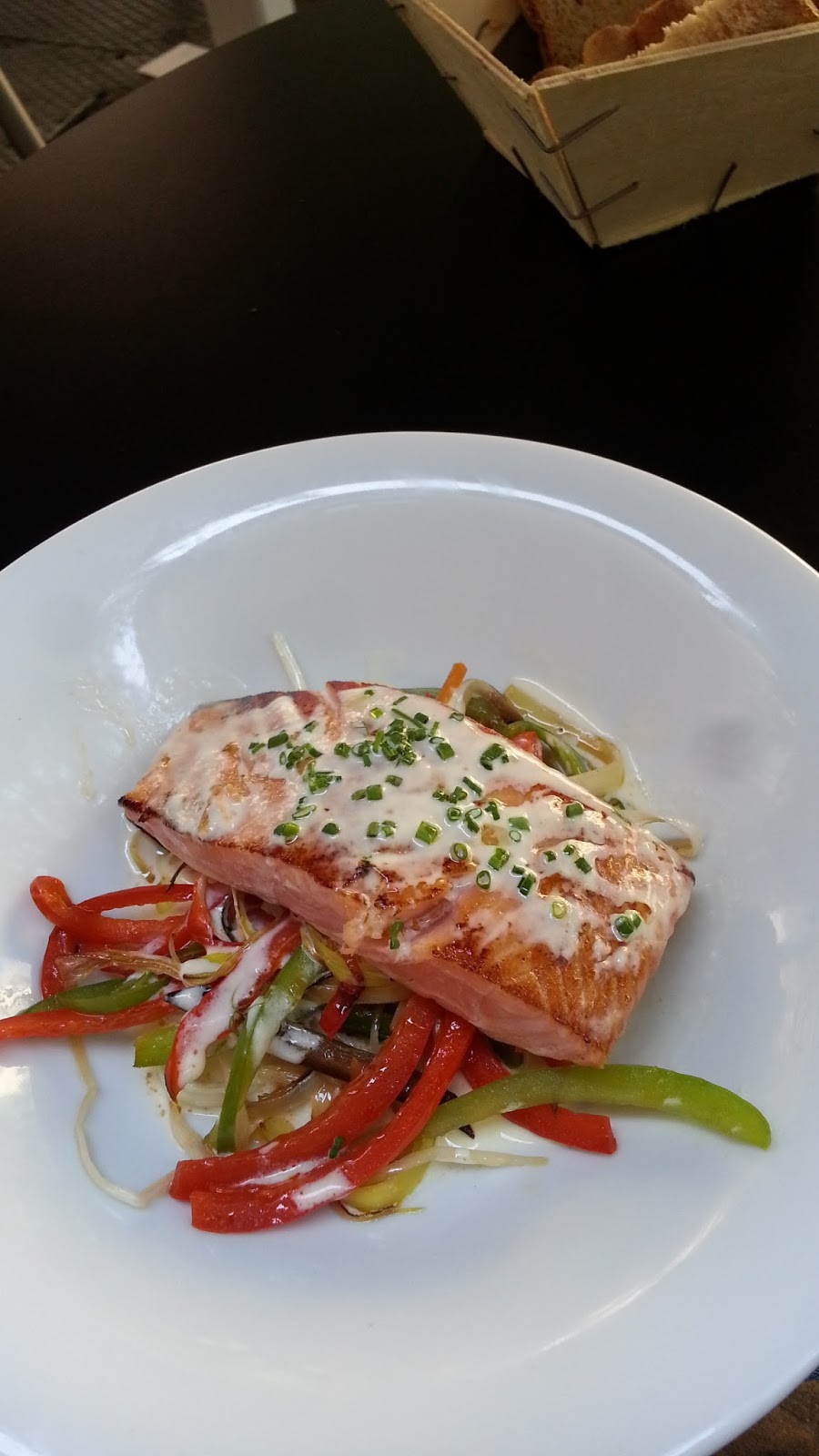
I decided to explore their lunch menú de degustación, and it was a delight. The menú offered the opportunity to sample several classic Catalan dishes. It consisted of gazpacho, ensalada con embutidos catalanes, salmón a la plancha con verduras, fricando de ternera. For dessert, I had a recuil de miel y frutos secos.


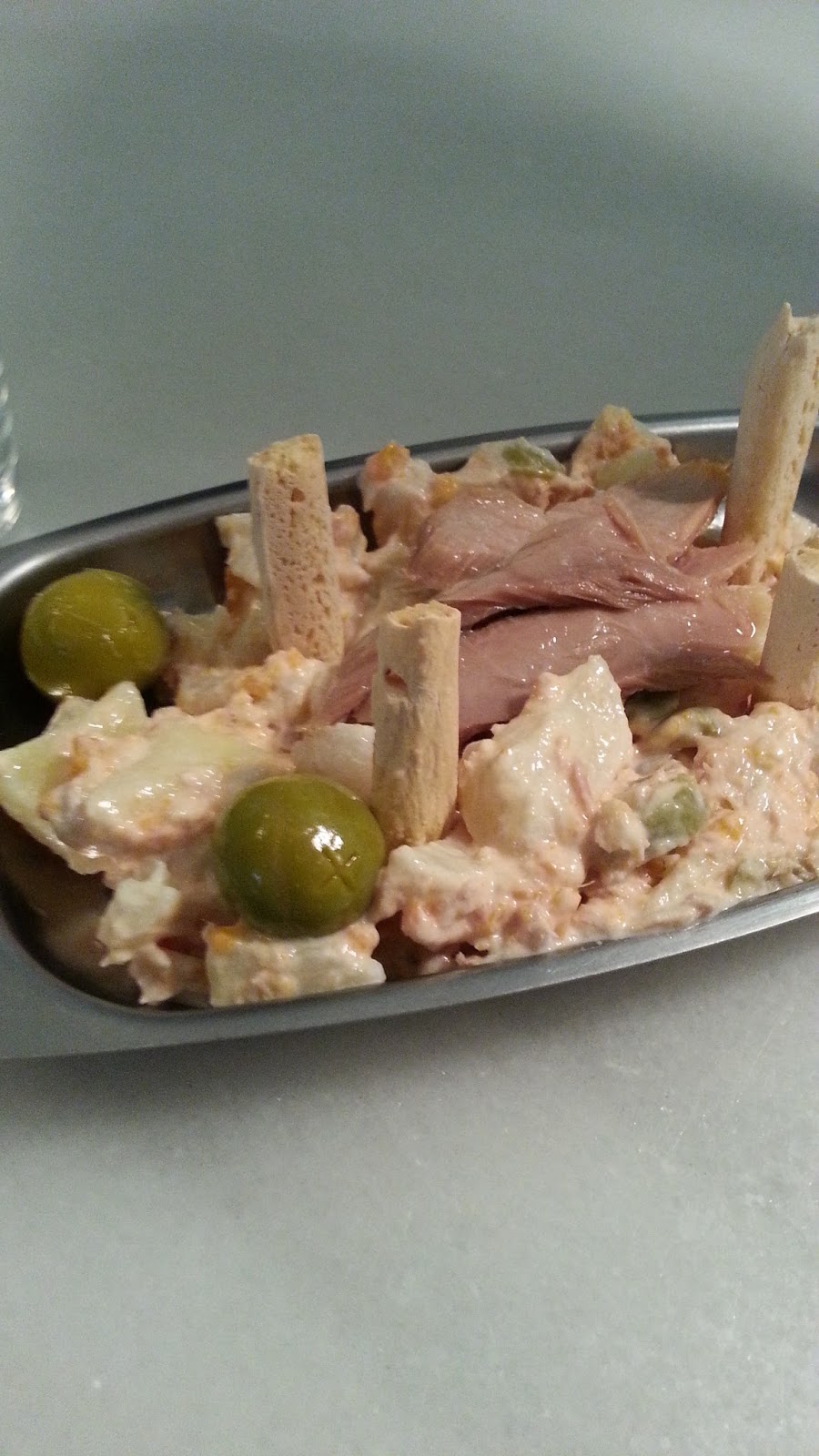
The starters were gazpacho and salad. The diced pieces of Catalan sausage (especially fuet) in the salad were especially superb and made for a tasty beginning. The gazpacho complemented the salad and was equally delicious.

The next course consisted of the grilled salmon with veggies. A simple dish and full of flavor. The fish was followed by a traditional Catalan meat stew, Fricando de ternera. A stew like this makes more sense during a cooler time of the year. Nonetheless, I had no complaints with this course. It was delightful with a rich broth and superb seasoning.


For dessert, I had a recuil con miel y frutos secos, white cheese accompanied by nuts drizzled with honey. It was a delightful way to end this meal. It was a simple, elegant dessert that balanced the stew and cleansed the palate. I order a café solo to finish the meal.

And I forgot to mention the vermút. During the meal, I sipped the excellent vermút for which they are famous. It was served in a small glass with ice.

The staff was very attentive and amiable. I selected the terraza, which allowed me to take in the world around the restaurant. The people-watching was entertaining, but the meal was the focus. The portions were ample and generous with reasonable prices. I definitely recommend the restaurant, especially if you want to sample some traditional Catalan dishes. I plan to return another day to savor once more the delicacies prepared by the chef and his crew.


How to get there:

Location: C/ del Carme, 42, El Raval, Barcelona
Metro: L3 at Liceu

Hours:
  • M-T 08:30-00:00
  • F-Sat. 08:30-02:00
  • Sun. 10:00-00:00
CLICK FOR A MAP.


Monday, August 31, 2015

Dalt de Tot

Located in Sarrià, near the Plaça Molina, the Dalt de Tot offers a relaxed atmosphere with superb small plates, salads, and other surprises. The selection of drinks includes the best vermut I have ever tasted and other invigorating beverages. Dalt de Tot is a superb place to meet with friends to relax after a long day of work. The decor is minimalist and functional. There are also two or three small tables just outside on the street.

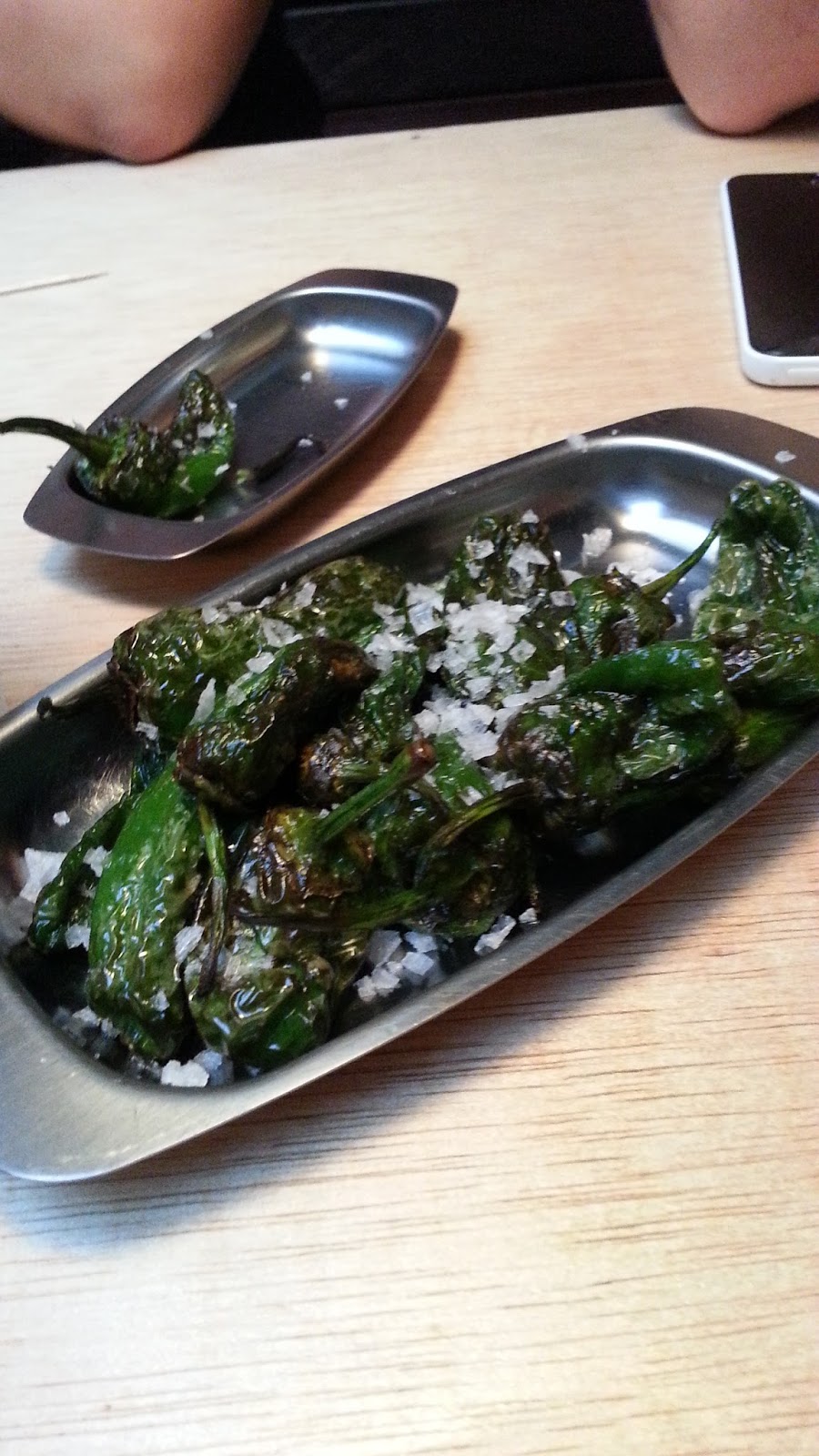
I went to the Dalt de Tot to sample the food. On the night I visited with friends, we tried a number of plates to get a sense of the food and variety. For starters, we ordered an "ensaladilla rusa" and "pimientos de padrón". Both were superb: the pimientos more so because they were freshly prepared, warm, and sprinkled with abundant sea salt. The "ensaladilla," a potato salad with tuna and other veggies, was also fresh with the right amount of mayo and accompanied by "bastones", small breadsticks typically served with this salad.


We then ordered an "amanida de bacallà" (codfish salad) and "secreto ibérico". The "Amanida" is a superb staple salad in the cuisine of Catalunya. This version had lots of cod with a superb combination of vegetables, onions, potatoes. The dish was excellent! The "secreto ibérico" was a surprise indeed. The 'secreto'  is a small, thin cut of meat that is hard to locate on the prized Iberian pigs, raised free range and acorn fed by Spanish farmers. The cut comes from between the shoulder blade and the loin and is famed for its marbling and no other cut displays this more deliciously than the 'secreto'. The dish was simple and uncomplicated, served with some greens. The meat was succulent and tasty. No need for sauce or gravy.

Finally, we ordered several desserts. I opt for the Brownie with vanilla ice cream. The ice cream was sprinkled with cinnamon. Simple, classic, and uncomplicated. Exactly what was needed at the conclusion of a fine meal with friends.

The Dalt de Tot is a superb location to chill and relax. It is not far from the Plaça Molina and within walking distance of  the Plaça Lesseps. It is worth the visit! Enjoy.

Location: Saragossa, 66 in Sarrià

Tuesday, August 25, 2015

Casa Amatller

Casa Amatller


Construida entre 1898 y 1900, la Casa Amatller es uno de los edificios más emblemáticos de Barcelona. Diseñado por Josep Puig i Cadafalch, arquitecto catalán de gran renombre, el edificio se encuentra en el Passeig de Gràcia, una de las avenidas más importantes de la ciudad de Barcelona.

Al principio de siglo XX, esta avenida se había convertido en la principal avenida del Eixample barcelonés. El edificio inspirado en el estilo neogótico con un remate escalonado propio de la arquitectura de los Países Bajos, fue el primero que a principios del siglo XX captó la atención de los barceloneses. 

En la misma manzana se encuentra la Casa Batlló, de Antoni Gaudí, y más abajo la Casa Lleó i Morera, de Lluís Domènech i Montaner.

Wednesday, July 29, 2015

Llibrería del Palau


Hoy fui a la librería se llama Llibrería del Palau cerca de la Plaza Urquinaona y la Palau de la Música. Es una tienda muy pequeña y estrecha. Desde afuera se puede ver cuántos libros que están en un lugar tan pequeño. Hay estantes que cubren cada pulgada de las paredes y todos son llenos completamente con libros.

 No hay una brisa y por eso para mí es muy abrumadora y sofocante. La trabajadora estaba hablando por teléfono pero era muy amable. Cuando entré la tienda y empiece a tomar fotos ella me dijo que si yo tomo fotos y no comprar nada que necesito poner un poco dinero en un tarro de propina. Pensé que eso fue muy raro porque nunca he oído una regla como eso. No había ningunas personas en la librería, pienso que es un resultado de su pequeño tamaño. También era interesante a mí que no hay un espacio o algunos sofás y sillas donde personas pueden sentarse.  


No me gustaba la tienda mucho pero me gustaba cómo se organiza sus libros; son organizados por región geográfica y también por tópico.


Tuesday, July 28, 2015

Txapela

Un día después de clase unas amigas y yo fuimos a una taparía para almorzar. Este restaurante se llama Txapela y todas las topas fueron en la forma de montaditos. A causa del tamaño de estos montaditos yo comí cuatro. Para mí el mejor montadito fue la sepia a la plancha que ellos se llama Pincho Ondarriba.
 Este estilo de tapear muestra las costumbres en España que meriendas son imprescindibles aspectos de la comida. Los montaditos permiten a una persona probar más que un plato durante la visita por menos euros que un plato grande. La gente adentro de esta taparía parece muy tranquilo y que este lugar fue utilizado para escapar del sol y calor. El aspecto mejor de esta taparía fue la inmensidad de combinaciones de tapas, la carta tiene más que cincuenta opciones entonces hay algo para cada cliente. Los olores me confundieron porque los sabores no siguen un patrón entonces hubo demasiado olores diferentes para identificar uno.

Monday, July 27, 2015

Laie

La librería Laie está escondida en una parte más tranquila del centro de Barcelona. Hay varias sucursales en toda la ciudad, pero no se sentía como un almacén de cadena típico. Cuando me fui, no había demasiados clientes. Me permitió pensar cuidadosamente sobre los libros.


Los signos interiores fueron principalmente en catalán, que era muy interesante en comparación con otras tiendas. Sin embargo, nos ofrecieron un montón de obras españolas, junto con las obras catalanas. Su selección de obras en inglés se limitó pero la variedad de géneros compensó esto. Los géneros variaron desde la filosofía al arte a las obras para los niños.                                                            


La cafetería de arriba era el complemento perfecto para el ambiente de la librería. Los clientes podían hojear la colección de la planta baja y luego disfrutar de sus compras con comida arriba en un entorno similar tranquilo, limpio, y amplio. La calle de abajo era visible con una gran vista.


Aunque sólo una calle de distancia de la concurrida y bulliciosa Passeig de Gracia, Laie estaba en un área abierta. Sería el tipo de lugar me gustaría ir para escapar del ambiente de la ciudad de Barcelona que a veces puede ser abrumador.

La librería "Laie"

Fui a la librería de Laie. Esta librería es en el Eixample de Barcelona. Cuando fui a Laie, compre una novela de Nicholas Sparks. Me gusta esta librería porque hay muchos tipos de libros y hay muchos libros de varias culturas. Algunas de las culturas en la librería son Latinoamérica, americano, castellano, portuguesa y catalana. Pienso que esto es interesante porque usualmente una librería sólo vende los libros en la lenguaje origen de la ciudad pero esta librería tiene muchas opciones. También, Laie no sólo una librería pero un café. En el primero piso, hay un café con muchas personas y mesas. El ambiente de la librería fue muy tranquilo porque la música de jazz está jugando en el fondo. Yo leería en el café de Laie porque me gusta el ambiente.


Esta imagen es el frente de la librería.


Estas imágenes de la librería son cuando camina a través la puerta. Los libros al lado de la escalera son los libros en inglés. Es interesante que estos libros son los primeros libros en la librería.

Estació de Franca

La semana pasada, fui al Estació de Franca para ver lo que Ana vio cuando ella llegué a Barcelona. Estaba pensando ¿si estaba en su lugar, como me sentiría? Mi primer pensamiento fue que el estació es muy grande. Y  fuera del estació es muy grande y muy guay también. Las calles afueras son muy anchas y es en un parte muy popular y turístico de Barcelona. El estació es cerca de la parada de Barceloneta por metro y la playa también. Por eso, hay mucha gente cerca de la parada del metro, pero no hay mucha gente en frente del estació. Esto me sorprendió.


Cuando fui, intenté buscar las cosas que Andrea habla sobre en la novela Nada. Estas incluyen el mar, mucha gente, una ciudad grande, las luces tristes, etc. Dentro del estació, es muy guay y muy grande también. Si estaba nueva y sola en una ciudad tan grande como Barcelona, pienso que tenería un poco miedo porque es mucho para aprender tu primero vez en una ciudad como esta. En mi opinión, no vi las luces tristes ni mucha gente con sus maletas. Sin embargo, estoy de acuerdo con Andrea que alrededor la esquina del estació, hay un olor del mar que es muy fresco. También, había mucha más gente alrededor el mar. Esto fue mi parte favorito del estació.

Llibreria Antiquaría Farré


Esta semana visité una tienda de libros en el barrio gótico. La tienda se llama Llibreria Antiquaría Farré y tiene libros viejos, únicos, y raros. Los libros en esta librería son sobre el arte, historia local como de Catalunya, y Vanguardismo. Desde el exterior se puede ver que es una tienda antiguo porque la puerta tiene un diseño más viejo y las letras del nombre de la tienda son en un estilo gótico. Cuando entre, el ambiente en la tienda fue un poco diferente de algunos librerías que he visitado en mi vida. La librerías no olía como los libros. Olía como inciensos. También no había nadie adentro excepto por un trabajador y un amigo de ella que se fue unos momentos después de que entre a la tienda. La librería no tenia música o lugares para sentarse y leer los libros. Estos fue un poco extraño para mi. En total, me gustó esta tienda porque no es moderno. No tiene una sección de ingles y nada más tiene libros de España y historia Catalán. Realmente fue una experiencia autentica.