Showing posts with label city. Show all posts

Friday, July 22, 2016

Templo de Debod

Templo de Debod

Templo
In January, I visited the magnificent Templo de Debod located in the Parque del Oeste in Madrid. Built in the 2nd century BCE in Upper Egypt by the Kushite king Adikhalaman, the structure constitutes one of the few examples of ancient Egyptian architecture outside Egypt. The Egyptian state donated the temple to Spain in 1968 as a sign of gratitude for Spanish assistance in saving architectural sites affected by the construction of the Aswan Dam.

Cityscape The Parque del Oeste, an urban green area developed in the early 20th century and expanded during the second half of the century, houses the Egyptian structures and provides an open space for these ancient temples.  The reconstructed buildings were open in July of 1972. The entrance to this site is free.

Columns A reflecting pool surrounds the Temple and highlights the differences between the modern Madrid surroundings and the ancient world that created these structures. Once inside, one can see various chambers, including chapels and crypts that give an insight into the rich complexity of ancient Egypt. Stunning ancient reliefs line some of the walls. And the columns that lead into the Osiris Chapel are impressive and a vital reminder of the cultural heritage of Egypt.
 

How to get there

The Templo de Debod is located on the Calle Ferraz, a short distance from the Plaza de España.

Entrance is free.

Hours 


Closed Mondays.

From Oct. 1 to March 3:
  • Tues. - Fri. --  9:45 to 13:45 & 16.15 to 18.15
  • Sat., Sun. and holidays -- 9:30 to 20:00
July 1 to Sept. 15:
  • Tues. - Fri. -- 10 to 14 & 18 to 20
  • Sat., Sun. and holidays -- 9:30 to 19:0

 Transportation: 

 By Metro: 

Plaza de España (lines 3 & 10) 

By Bus:

Line 74 (stop Calle Ferraz)
Lines 25, 39, 46, 75, 138 & C1 (stop Cuesta de San Vicente-Cadarso)
Lines 3, 44, 133, 148 & C2 (stop Plaza de España)
Lines 1, 2, 74 (stop Princesa-Ventura Rodríguez)

The site is not handicapped accessible.

A brochure is available. Click here.

Reflecting Pool
 

Sunday, July 10, 2016

Casa Golferichs

Casa Golferichs

Exterior
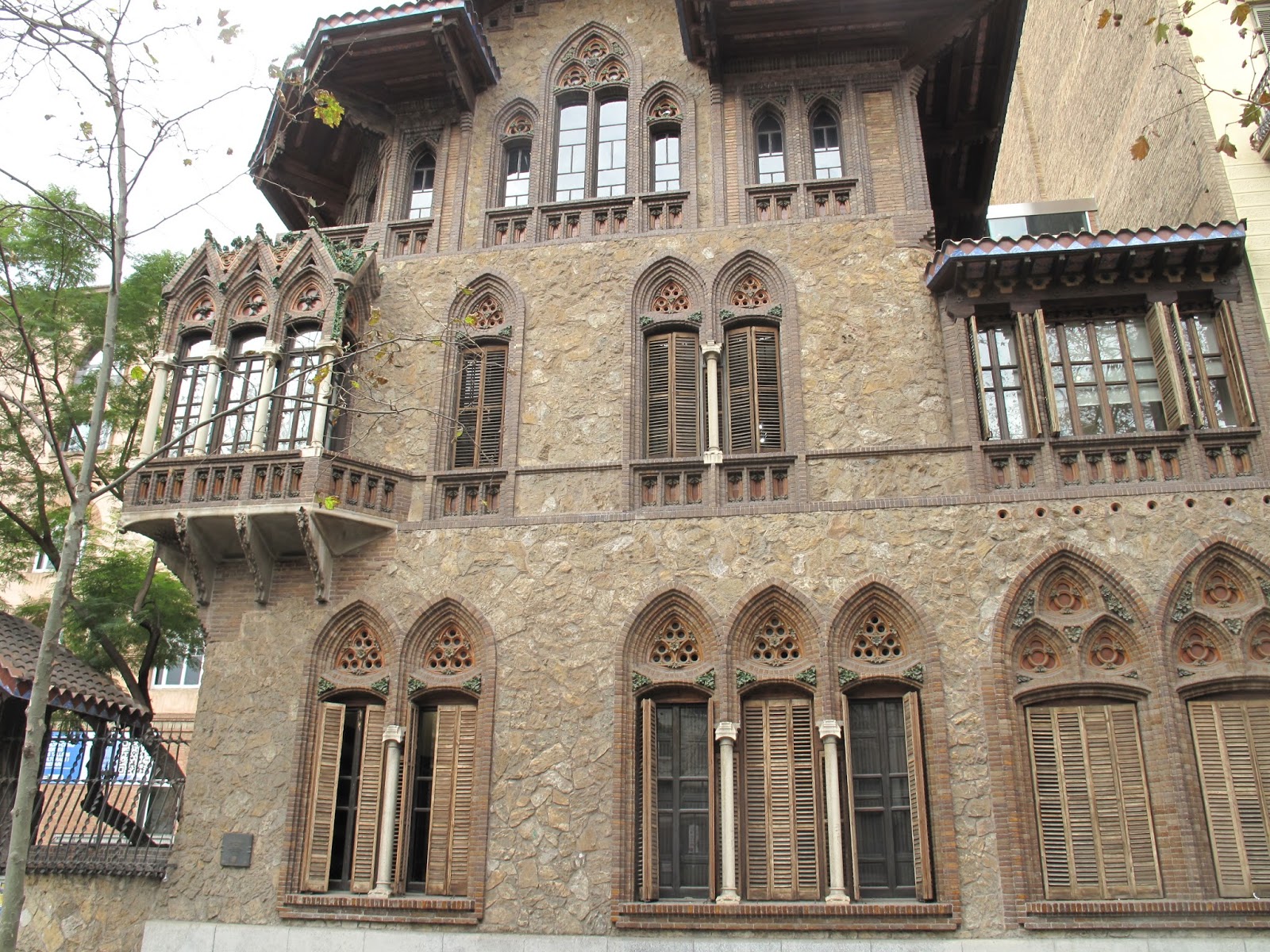
The Casa Golferichs sits on the Gran Via de les Corts Catalanes, one of the busiest boulevards in Barcelona. Built in 1901 by Macari Golferichs i Losada, a prominent figure in early 20th-century Catalunya and supporter of Modernisme aesthetics, the private residence was designed by the architect Joan Rubió i Bellver whose work was influenced by Gaudí. The building is affectionately known as El Xalet and houses a cultural center operated by Districte de l’Eixample.

TribunaThe structure came close to being demolished in the 1970s, but the Ajuntament de Barcelona decided to preserve the structure and to restore the building with the purpose of preserving its artistic and cultural significance. The building serves as the quarters of the Golferichs Centre Civic, which offers local residents a range of conferences and discussions, exhibitions and adult education courses, and organizes various thematic walking tours of the city.


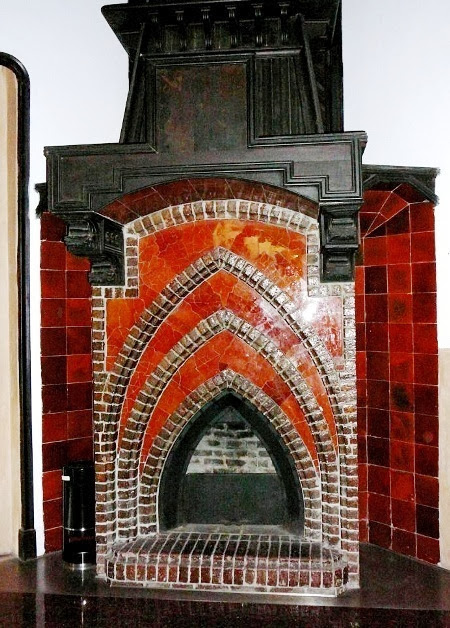
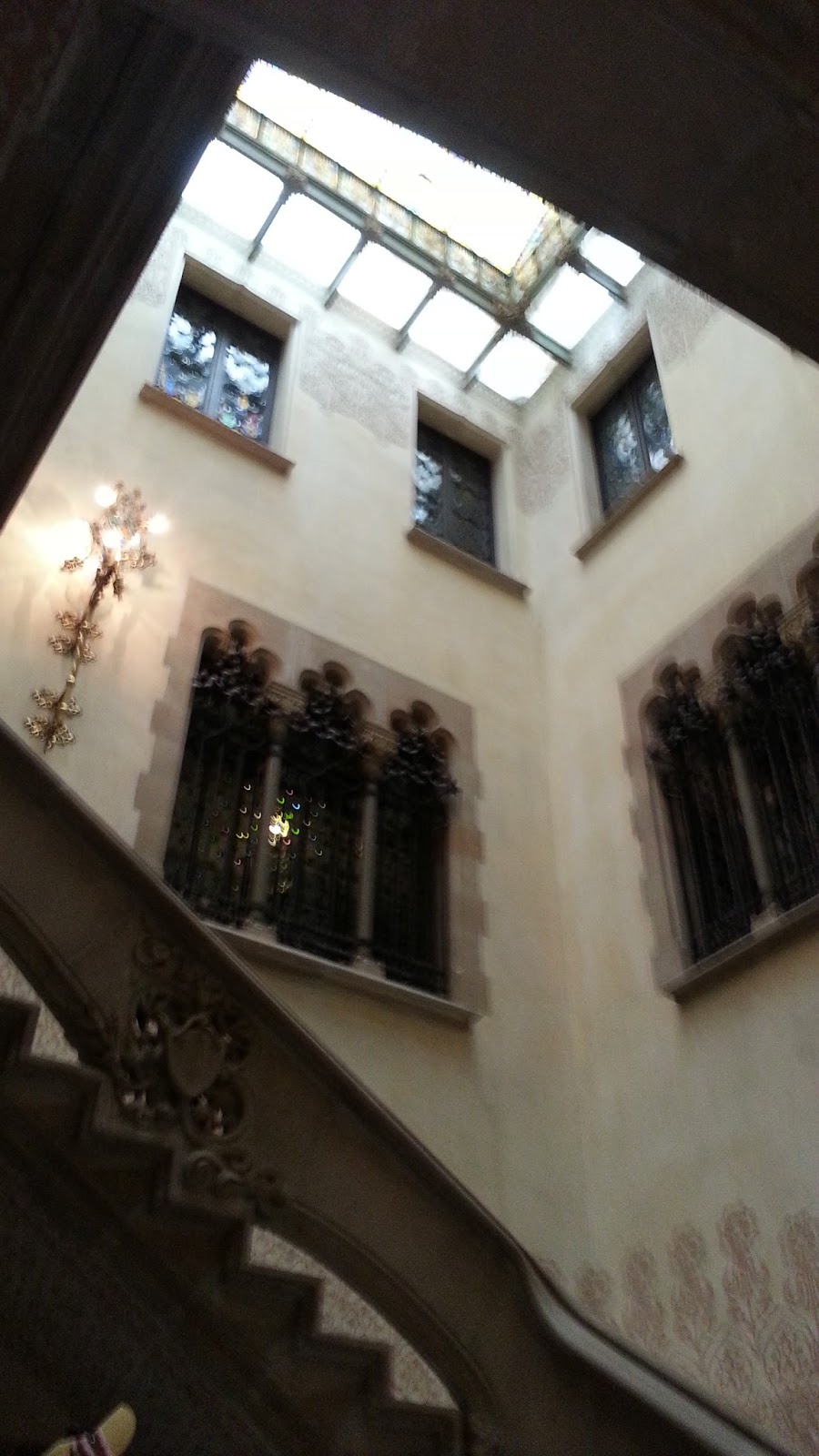
ChimineaStairsThe structure displays many of the quirky design elements associated with the Catalan modernista movement. The exterior elements of the house utilize masonry, ceramics, ironwork, and wood to give the structure a distinctive Neomedieval look. The eaves and roof of the house echo this medievalism. In its interiors, one also finds similar design tendencies, with ample use of ceramics tiles and ornate woodwork to evoke the medieval period.

MixturesIn a city full of spectacular examples of Catalan modernisme, this building offers an example of how this aesthetic was applied by other architects. Its restoration has preserved it for subsequent generations to enjoy.


How to get there


Address: Gran Via de les Corts Catalanes, 491 (corner of the Carrer de Viladomat)

Metro L1 (Urgell or Rocafort)
Bus 9, 41, 50, H12

Hours: 
Monday to Fridays, 10 am to 8 pm
Saturday, 10 am to 2 pm.

Plaque

Saturday, July 9, 2016

Búnquers at the Turó de la Rovira

Búnkers at the Turó de la Rovira


Vista


The Turó de la Rovira, situated in one of the mountains of the Carmel neighborhood near the Horta district, overlooks the city of Barcelona. The word la rovira refers to the oaks located along the mountain (Turó ). Although the city has spread across and below the sides of the mountain, the location of this park is high enough to afford a 360º panoramic view of metropolitan Barcelona. At 262 meters above sea level, one can see the urban expanse of Barcelona, from Montjuïc in the southwest to the coastal areas to the north. The blue waters of the Mediterranean forms a magnificent backdrop for this view of the metropolis. The views are breathtaking and spectacular.

Mountainside

The hilltop houses the remnants of an anti-aircraft installation and military observation complex built during the Spanish Civil War to defend the city from aerial attacks by the Nationalist forces of Franco. There are bunkers, gun turrets, observation areas, barracks, and the remains of other military installations. It was one of the four strategic installation for the defense of Barcelona during the Spanish Civil War. Later in its existence, the site also houses a shantytown known as "Los Cañones" until the 1990s.


Military structuresThe Museu d'Història de la Ciutat has developed this area as a heritage site with an exhibition space dedicated to the history and importance of these installations. The intent is to preserve the structures and honor the efforts to protect the city during that war. The Museu has a downloadable brochure describing this site and its history. Click here to download.

Hours for the site:

  • Wednesday, 5pm to 8pm.
  • Saturday & Sunday, 10am to 2pm
  • July & August: Saturday, 5pm to 8pm.
  • Sunday, 10am to 1pm & 5pm to 8pm
  
How to get there:
Location: Carrer de Marià Labèrnia, s/n
Transportation: Bus 119 or V17
No entrance fee.

View of pedestrian bridgeWhile the area has easy access points, the climb to the bunkers can be steep and is in some places via narrow stairs. The "Búnquers" do not have full handicap accessibility. The park, however, is very accessible with pleasant walks and even pedestrian bridges.


View of Barcelona


Military structures

Tuesday, August 25, 2015

Casa Amatller

Casa Amatller


Construida entre 1898 y 1900, la Casa Amatller es uno de los edificios más emblemáticos de Barcelona. Diseñado por Josep Puig i Cadafalch, arquitecto catalán de gran renombre, el edificio se encuentra en el Passeig de Gràcia, una de las avenidas más importantes de la ciudad de Barcelona.

Al principio de siglo XX, esta avenida se había convertido en la principal avenida del Eixample barcelonés. El edificio inspirado en el estilo neogótico con un remate escalonado propio de la arquitectura de los Países Bajos, fue el primero que a principios del siglo XX captó la atención de los barceloneses. 

En la misma manzana se encuentra la Casa Batlló, de Antoni Gaudí, y más abajo la Casa Lleó i Morera, de Lluís Domènech i Montaner.

Thursday, July 2, 2015

Colm Tóibín

Colm Tóibín

Colm Tóibín is an Irish novelist, journalist, essayist, playwright, critic. and poet. Born in 1955, Tóibín grew up in Enniscorthy, Co. in the southeast of Ireland. He attended secondary school in Wexford and later studied at University College Dublin where he was graduated in 1975. Immediately after graduation, he decided to move to Barcelona where he lived until 1978.  The South, his first novel (published in 1990) is inspired by his experiences in Barcelona during the late seventies.

In 1990, he also published Homage to Barcelona, a work of non-fiction that explores the rich history and culture of the city. His work draws from his own experiences in this city during the turbulent years of transition from dictatorship to democracy. His observations in Homage celebrates the vibrant culture and art of Catalunya and provides insight into the dynamics that shape Catalan society. The book is witty, elegant, and written in an extremely engaged fashion.

In 2011, The Observer named Tóibín one of Britain's Top 300 Intellectuals. His literary output over the years has grown to 10 works of fiction and 18 of non-fictions. He currently holds the Irene and Sidney B. Silverman Professorship of the Humanities at Columbia University.


Sunday, June 21, 2015

Modernismo


Azulejos reproducen unas flores amarillas
 llamadas clavelones de la India

MODERNISMO

En Barcelona a finales del siglo XIX, se desarrollan tendencias arquitectónicas que rechazan los esquemas simétricos y clásicos en pro de la ondulaciones y la asimetría con el fin de transmitir vitalidad y fuerza. Denominado "Modernismo" (en catalán, Modernisme), este movimiento es principalmente arquitectónico y urbano. Intentaba convertir a los edificios en espacios urbanos  atractivos donde los habitantes podían encontrar comodidad e inspiración.

Esta corriente arquitectónica buscaba, por una parte, la modernidad y, por otra, la regeneración cultural a través del arte y los diseños. Desarrollaba acercamientos inspirados en la Naturaleza, en la arquitectura hispano-árabe y en el dibujo curvilíneo. Con frecuencia, los arquitectos modernistas incorporaban en sus edificaciones materiales como cerámica e hierro para jugar con el color, la simetría y nuevos conceptos de espacio. También se empleaban elementos decorativos en forma de pájaros, mariposas, hojas y flores, cuyos efectos eran crear un aspecto natural dentro del espacio urbano de una ciudad enorme como era la Barcelona a finales del XIX.


Reja de hierro colado en forma de hojas de palmito
Barcelona es una ciudad con ejemplos magníficos de arquitectura modernista.. Hay un número sinfín de edificios de calidad por el uso de materiales valiosos y por el aire de palacio que se adopta en la disposición de los elementos arquitectónicos. 

Existen varias rutas por la ciudad que ofrecen muchas oportunidades para explorar y conocer la ciudad modernista de Barcelona y sus maravillosas estructuras.


Recomiendo especialmente una visita al tramo del Paseo de Gracia situado entre las calles de Aragón y Consejo de Ciento.  A través de un detenido paseo por esta avenida, uno puede llegar a conocer  los más emblemáticos edificios de la Barcelona modernista.

Entre 1900 y 1914 el Paseo de Gracia se consolidó como el principal centro residencial burgués constituido en gran parte por edificios modernistas diseñados por los mejores arquitectos de la época.En este tramo conocido como la "Manzana de la discordia", hay ejemplos únicos de edificios diseñados por Lluís Domènech i Montaner, Josep Puig i Cadafalch, Antoni Gaudí i Cornet.

Merece la pena pasar unas horas por esta zona de Barcelona y apreciar la dinámica urbana y los elementos estéticos de este movimiento.

Casa Amatller y Casa Batlló


Cómo llegar

Por metro: L3 & L4, estación Passeig de Gràcia

Monday, June 15, 2015

Jaume I

Jaume I es una de mis favoritas estaciones del Metro de Barcelona. Situada bajo la Vía Laietana, la estación se puso en servicio en 1926 y pertenece a la línea 4 del Metro de Barcelona. La entrada principal queda en la Plaça d’Àngel, lugar icónico de la Barcelona medieval. La estación sirve como puente entre la Ciutat Vella y el resto de la ciudad, ofreciendo una micro-historia de la evolución urbana de Barcelona.
 
La Via Laietana comunica el Ensanche con el puerto atravesando la Ciutat Vella. Su nombre reconoce la importancia de los primeros habitantes íberos a la evolución de la ciudad. La construcción de la nueva avenida comienza en 1908 con un primer tramo desde el puerto hasta la plaza del Ángel y se concluye en 1913. El estilo arquitectónico de la escuela de Chicago influyó en la construcción, principalmente dedicada a edificios oficiales y espacios de oficinas. La calle tiene el efecto de crear una imagen urbana que perdura.
 
A la salida de la estación, se encuentra una de mis pastelerías favoritas, La Colmena. Fundada en 1864, La Colmena lleva más de un siglo perfumando la plaza del Ángel con el aroma de sus caramelos artesanales y dulces tradicionales siguiendo las recetas propias.  Es el sitio perfecto para merendar y disfrutar de los productos elaborados de forma artesanal. Se merece visitar este lugar encantador lleno de historia y tradición.


Sunday, June 7, 2015

Arc de Triomf

Arc de Triomf


The Arc de Triomf is a Neo-Moorish triumphal arch located on the Passeig de Lluís Companys. The site is a short walk from the Parc de la Ciutadella, a vibrant urban park which houses the Parliament of Catalunya, several museums, a world-class zoo, and urban green spaces.

Built to serve as the main entry gate for the Exposición Universal de Barcelona of 1888, the Arch commemorates the arts, industry, trades, and agriculture of Catalunya. The design by Josep Vilaseca i Casanovas features ground-breaking sculptural and decorative elements. The elaborate decorative program of this monument consists of allegorical statues and narrative friezes related to Barcelona and its welcoming of the nations of the world to the cityIt has become one of the city's iconic landmarks.
  • Location: Eixample District, located at Passeig de Lluís Companys and Passeig de Sant Joan. 
  • Metro: L1, parada: Arc de Triomf 


Saturday, June 6, 2015

Barcelona 2015

Barcelona

In 2015, the KU Summer Language Institute will again return to Barcelona, the cosmopolitan capital of Spain’s Catalunya region. The city's landmarks are plentiful, spectacular, and welcoming.

The Ciudat Vella houses many structures from the Middle Ages and Renaissance. The Eixample developed during the 19th-century and contains wide boulevards, incredible Modernisme buildings, and imposing monuments to the city's emergence as an economic powerhouse. The quaint neighborhoods of Sarrià, Gràcia, and Pedralbes lend a small-town flavor to this metropolis of nearly 1.6 million.
 
But Barcelona is much more. The modernist architecture of Antoni Gaudí created unique structures that challenged traditional architectural styles and produced innovative designs that still have an impact on the city. Sagrada Familia, considered Gaudí's masterwork, has left an influential mark on the city, and its iconic architecture continues to define the city's identity.

Every year I visit Barcelona, I try to absorb the beauty of this city. If you visit the Parc Güell, another of Gaudí's creations, take a moment to experience the views of the city. The Parc, built on a rocky hill (Muntanya Pelada or "Bare Mountain" in English), has magnificent views of the city, the harbor area and the Mediterranean. It is worth the climb and walk to the mountain.
View of Barcelona

A sentimental pastime of mine is to sample the various tapas of the ´Ciudad Condal´. I enjoy seeking out tapas restaurants and experiencing the neighborhoods that surround these establishments. I try to search for filled with local people and far from the tourist routes where the food is usually prepared with authenticity and served with simplicity by an attentive staff.

Most of  all, I return to reconnect with this city and to discover new places, share time with old friends. I did the tourist thing years ago. Now when I return to the plaças and ramblas, I seek to discover new details and facets of Barcelona.

Plaça de Catalunya

 What will you discover?


To access an online map of the city with other information about visiting Barcelona click here.