Showing posts with label Foods. Show all posts

Saturday, September 5, 2015

Carmelitas

Tapas Carmelitas y Vermutería Carmelitas


During my visit to Barcelona this summer, I discovered a neat restaurant in El Raval. Not far from the Biblioteca de Catalunya, Carmelitas is located on c/ del Carme 42 and offers a solid range of tapas and drinks. The restaurant also specializes in vermút. The location has comfortable indoor seating  and a terraza where you can enjoy the sights and sounds.

I decided to explore their lunch menú de degustación, and it was a delight. The menú offered the opportunity to sample several classic Catalan dishes. It consisted of gazpacho, ensalada con embutidos catalanes, salmón a la plancha con verduras, fricando de ternera. For dessert, I had a recuil de miel y frutos secos.


The starters were gazpacho and salad. The diced pieces of Catalan sausage (especially fuet) in the salad were especially superb and made for a tasty beginning. The gazpacho complemented the salad and was equally delicious.
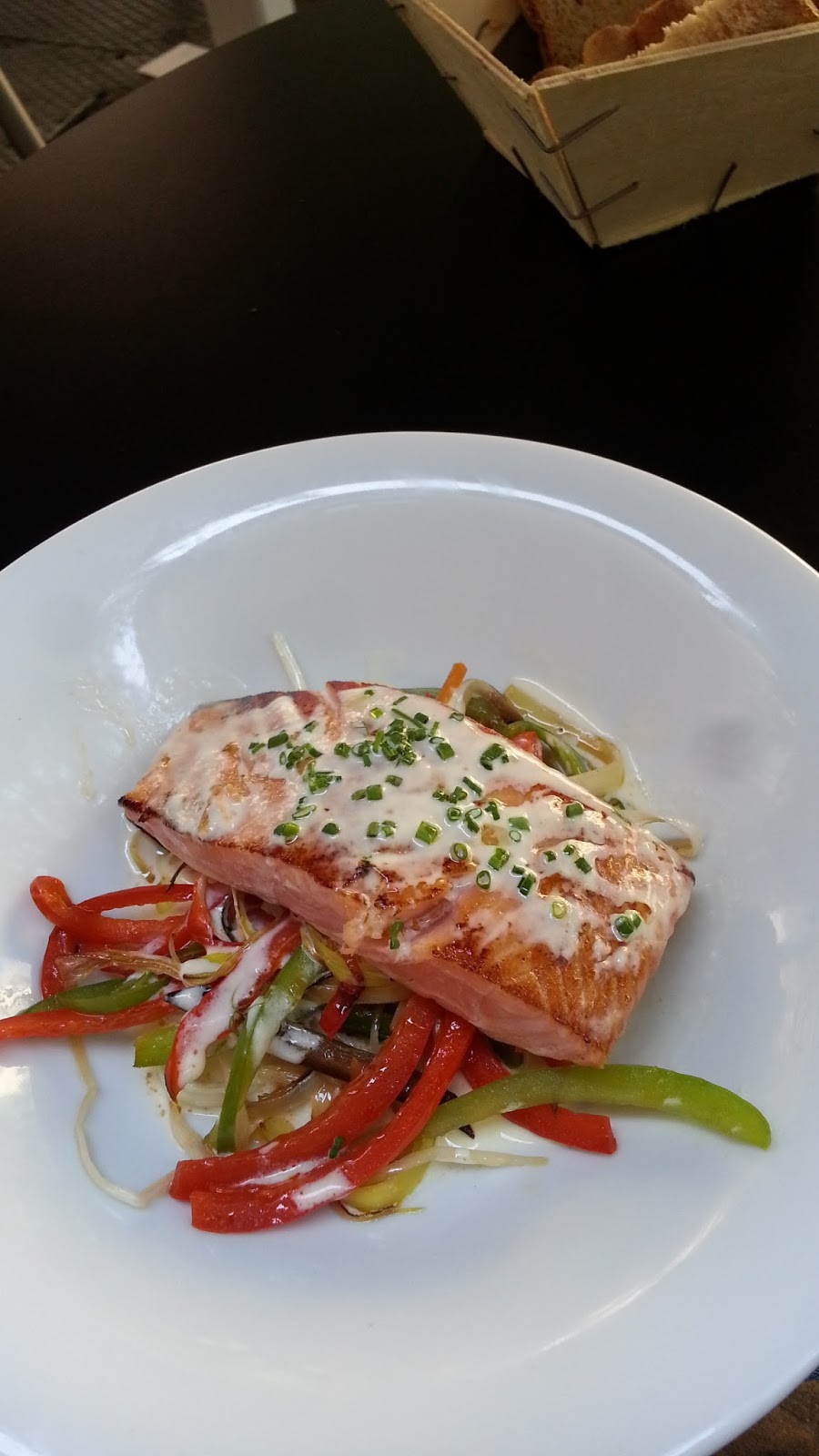
The next course consisted of the grilled salmon with veggies. A simple dish and full of flavor. The fish was followed by a traditional Catalan meat stew, Fricando de ternera. A stew like this makes more sense during a cooler time of the year. Nonetheless, I had no complaints with this course. It was delightful with a rich broth and superb seasoning.


For dessert, I had a recuil con miel y frutos secos, white cheese accompanied by nuts drizzled with honey. It was a delightful way to end this meal. It was a simple, elegant dessert that balanced the stew and cleansed the palate. I order a café solo to finish the meal.

And I forgot to mention the vermút. During the meal, I sipped the excellent vermút for which they are famous. It was served in a small glass with ice.

The staff was very attentive and amiable. I selected the terraza, which allowed me to take in the world around the restaurant. The people-watching was entertaining, but the meal was the focus. The portions were ample and generous with reasonable prices. I definitely recommend the restaurant, especially if you want to sample some traditional Catalan dishes. I plan to return another day to savor once more the delicacies prepared by the chef and his crew.


How to get there:

Location: C/ del Carme, 42, El Raval, Barcelona
Metro: L3 at Liceu

Hours:
  • M-T 08:30-00:00
  • F-Sat. 08:30-02:00
  • Sun. 10:00-00:00
CLICK FOR A MAP.


Monday, August 31, 2015

Dalt de Tot

Located in Sarrià, near the Plaça Molina, the Dalt de Tot offers a relaxed atmosphere with superb small plates, salads, and other surprises. The selection of drinks includes the best vermut I have ever tasted and other invigorating beverages. Dalt de Tot is a superb place to meet with friends to relax after a long day of work. The decor is minimalist and functional. There are also two or three small tables just outside on the street.

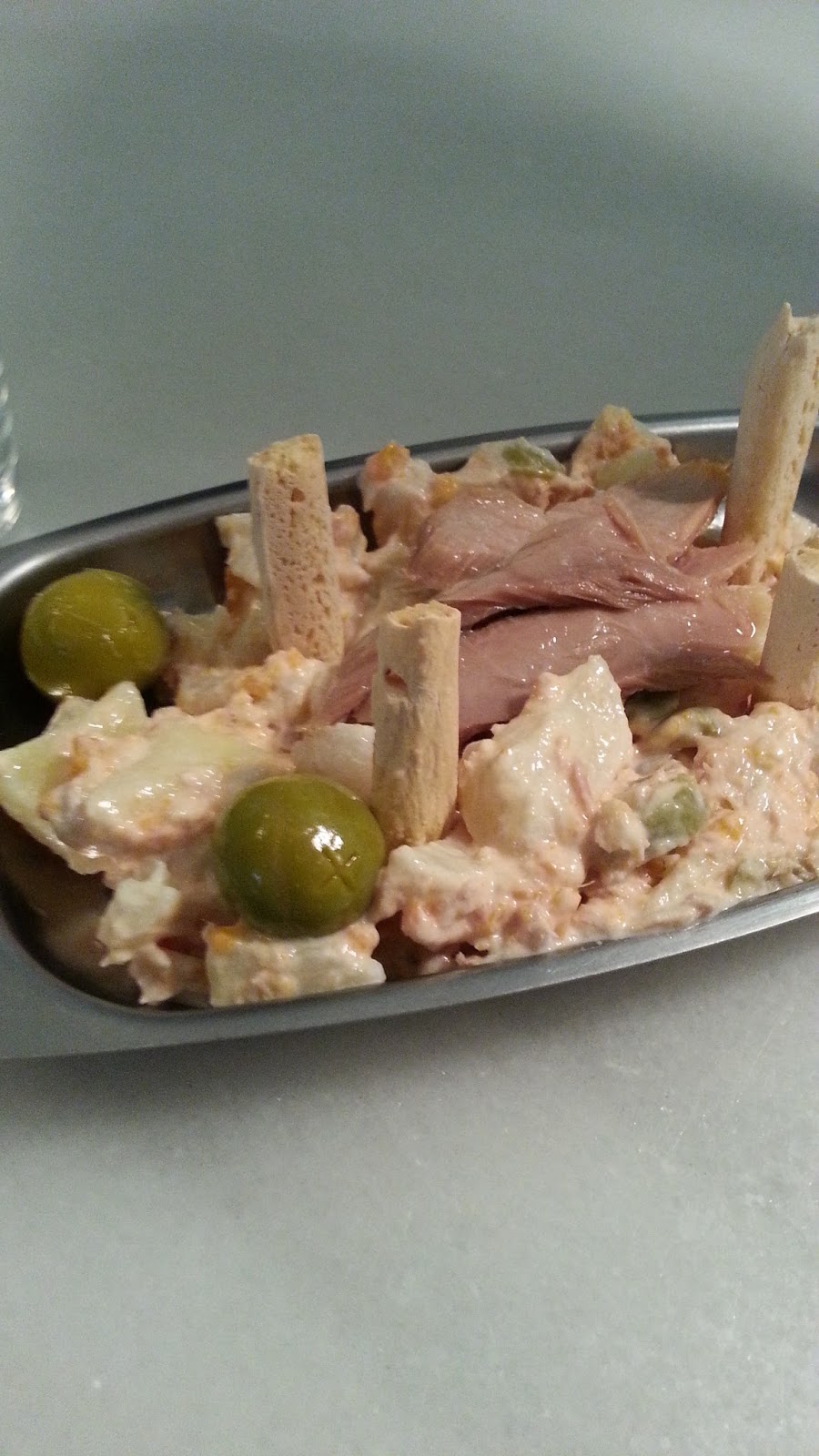
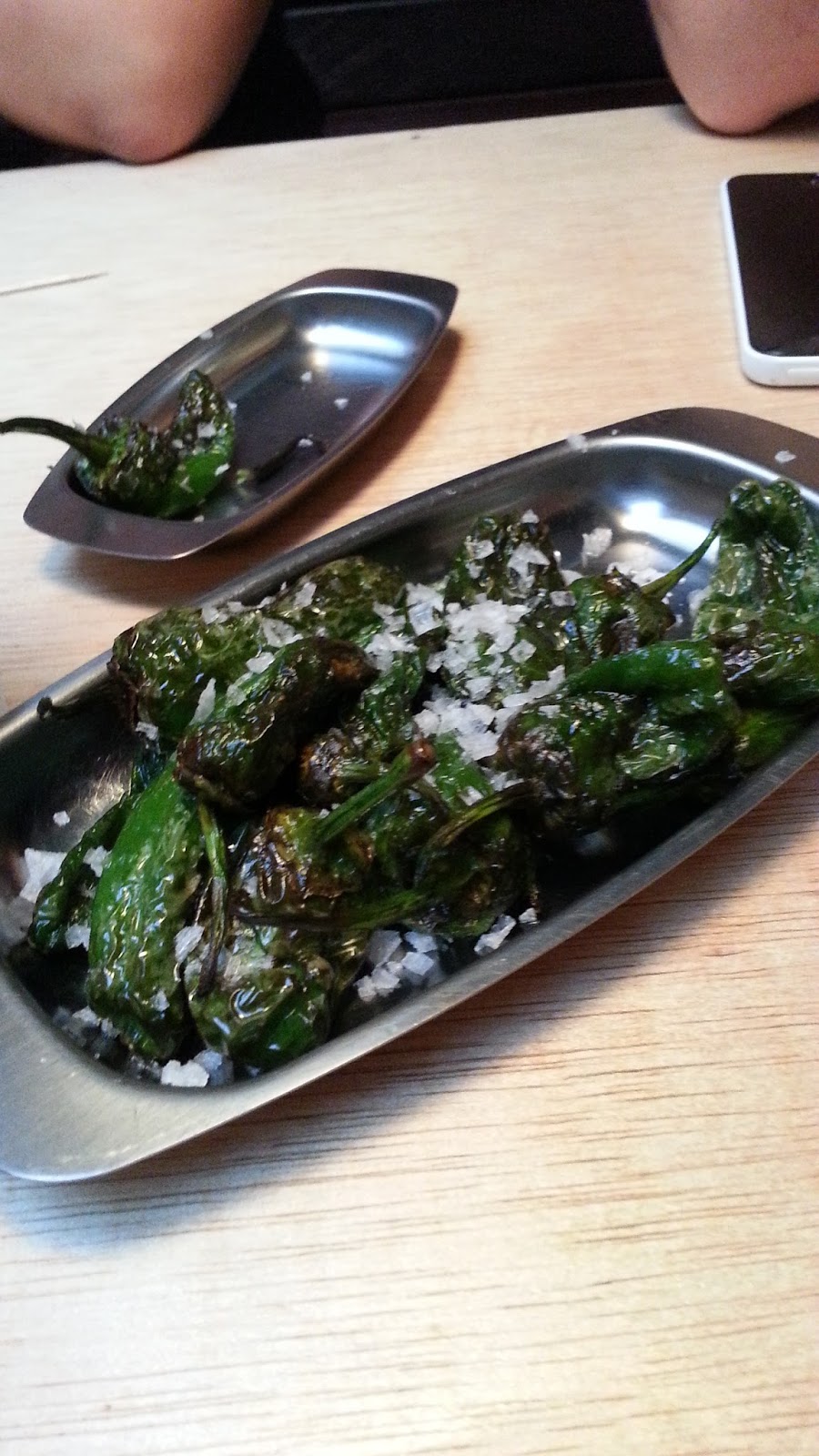
I went to the Dalt de Tot to sample the food. On the night I visited with friends, we tried a number of plates to get a sense of the food and variety. For starters, we ordered an "ensaladilla rusa" and "pimientos de padrón". Both were superb: the pimientos more so because they were freshly prepared, warm, and sprinkled with abundant sea salt. The "ensaladilla," a potato salad with tuna and other veggies, was also fresh with the right amount of mayo and accompanied by "bastones", small breadsticks typically served with this salad.


We then ordered an "amanida de bacallà" (codfish salad) and "secreto ibérico". The "Amanida" is a superb staple salad in the cuisine of Catalunya. This version had lots of cod with a superb combination of vegetables, onions, potatoes. The dish was excellent! The "secreto ibérico" was a surprise indeed. The 'secreto'  is a small, thin cut of meat that is hard to locate on the prized Iberian pigs, raised free range and acorn fed by Spanish farmers. The cut comes from between the shoulder blade and the loin and is famed for its marbling and no other cut displays this more deliciously than the 'secreto'. The dish was simple and uncomplicated, served with some greens. The meat was succulent and tasty. No need for sauce or gravy.

Finally, we ordered several desserts. I opt for the Brownie with vanilla ice cream. The ice cream was sprinkled with cinnamon. Simple, classic, and uncomplicated. Exactly what was needed at the conclusion of a fine meal with friends.

The Dalt de Tot is a superb location to chill and relax. It is not far from the Plaça Molina and within walking distance of  the Plaça Lesseps. It is worth the visit! Enjoy.

Location: Saragossa, 66 in Sarrià

Tuesday, June 23, 2015

Nit de Sant Joan

Nit de Sant Joan

Se celebra la Noche de San Juan (en catalán Nit de Sant Joan) la noche del 23 de junio. Es una fiesta de origen pagano que da la bienvenida al verano. Aunque las celebraciones tienen una conexión directa con los ritos precristianos, la celebración coincide con la Fiesta de San Juan Bautista, figura importante en la Iglesia Católica.

En España predominan las verbenas locales con costumbres tradicionales vinculadas al "fuego" como instrumento de la purificación. Hay enormes hogueras para recibir el verano y actuaciones folclóricas para animar a los asistentes.

Canigó
En Catalunya, destaca la Llama del Canigó, que desciende hasta cientos de pueblos para encender las hogueras. Canigó, un macizo montañoso de los Pirineos en el Rosellón (sur de Francia), se considera como una montaña de gran resonancia cultural. El Canigó es visto como símbolo del nacimiento de la nación y la lengua catalana

Tradicionalmente el 22 de junio se sube a la cima, llamada "pica del Canigó", para encender una hoguera que se vigila durante toda la noche. Al día siguiente la gente baja hasta Perpiñán con antorchas encendidas de esa hoguera y vuelve cada uno a su lugar de origen para, según la tradición, encender todas las hogueras de la noche de San Juan de Cataluñya.

Plaça de Sant Jaume
En Barcelona, se recibe la Flama en la Plaça Sant Jaume con gran festejo y celebración. Incluso, hay bailes, la interpretación de Els Segadors, l´Himne Nacional de Catalunya, y otras actividades tradicionales. La recepción afirma la identidad catalana a través de estas actuaciones vinculadas a las tradiciones de un pueblo.


En Catalunya, un elemento importante de las fiestas es la preparación de las "cocas", un nombre aplicado a una amplia gama de pasteles, tortas y panes. Estos postres suelen acompañar las reuniones familiares durante la Noche de San Juan.

La Coca de Sant Joan se elabora haciendo una maza de harina en cuyo centro se añaden el azúcar, los huevos, la sal, la levadura, la ralladura de cáscara de limón y la manteca de cerdo. Se mezcla bien y se amasa hasta obtener una masa homogénea. Se deja reposar y se estira con el rodillo hasta obtener una torta de forma ovalada. Se extiende sobre una lata engrasada hasta dejarla con un grosor de 1 cm aproximadamente. Se cubre con trozos de fruta confitada y se deja fermentar a temperatura tibia durante una media hora. Se espolvorea con azúcar y se cuece al horno hasta que esponja y se dore la superficie. Algunas cocas incluyen mazapán o crema catalana. También pueden incluir piñones, almendras, etcétera. Es un postre sabroso y tradicional.

Monday, June 15, 2015

Jaume I

Jaume I es una de mis favoritas estaciones del Metro de Barcelona. Situada bajo la Vía Laietana, la estación se puso en servicio en 1926 y pertenece a la línea 4 del Metro de Barcelona. La entrada principal queda en la Plaça d’Àngel, lugar icónico de la Barcelona medieval. La estación sirve como puente entre la Ciutat Vella y el resto de la ciudad, ofreciendo una micro-historia de la evolución urbana de Barcelona.
 
La Via Laietana comunica el Ensanche con el puerto atravesando la Ciutat Vella. Su nombre reconoce la importancia de los primeros habitantes íberos a la evolución de la ciudad. La construcción de la nueva avenida comienza en 1908 con un primer tramo desde el puerto hasta la plaza del Ángel y se concluye en 1913. El estilo arquitectónico de la escuela de Chicago influyó en la construcción, principalmente dedicada a edificios oficiales y espacios de oficinas. La calle tiene el efecto de crear una imagen urbana que perdura.
 
A la salida de la estación, se encuentra una de mis pastelerías favoritas, La Colmena. Fundada en 1864, La Colmena lleva más de un siglo perfumando la plaza del Ángel con el aroma de sus caramelos artesanales y dulces tradicionales siguiendo las recetas propias.  Es el sitio perfecto para merendar y disfrutar de los productos elaborados de forma artesanal. Se merece visitar este lugar encantador lleno de historia y tradición.


Saturday, June 7, 2014

Mercado de Santa Caterina


Me encantan los diversos mercados de Barcelona. Mi favorito es el Mercado de Santa Caterina, un mercado municipal que se encuentra a metros de la Catedral y el Barri Gòtic. Situado en el solar del antiguo convento de Santa Caterina, cuyos terrenos fueron concedidos al ayuntamiento de la ciudad para levantar el mercado, el edificio original es obra de los arquitectos Josep Mas i Vila y Josep Buxareseu y se construye en 1848 para suministrar comestibles al sector popular del barrio.

En 1997 se inaugura una restauración del edificio bajo la dirección de Enric Miralles i Benedetta Tagliabue. Es un diseño muy original con techos ondulantes cubiertos con mosaicos coloreados. La rehabilitación se termina en 2005.

Hoy en día el mercado ofrece una amplia variedad de comestibles: frutas y verduras de la huerta catalana, legumbres, carnes, pescados, salazones y sobre todo muchos embutidos y quesos.También hay un elegante restaurante con varias opciones de cocina.

Merece una visita.

 Av. Francesc Cambó, 16
 Metro: L4, parada Jaume I


Friday, July 29, 2011

In transition

Ángel Sierra
I can´t bear to say adieu to Barcelona. It always is difficult to leave behind Catalunya and Spain. My returns to the EEUU are always slow and full of leaving taking. I delay the departure as much as I can.

A couple of nights ago while in Madrid, I met up with a scholar and fellow medievalist; we decided to have some copas and dinner to catch up with our research happenings and events. We started at the Taberna Ángel Sierra, a venerable establishment on the Plaza de Chueca, on the Calle de Gravina, 11. We sipped cool vermut and talked scholarly matters.

The taberna has an old Madrid feel and lacks the clean, ultra-modern decoration that seems to characterize a lots of places in Madrid and Barcelona. Dusty bottles line the walls, and there is a small dinning room behind the bar. Not el Bulli, but appetizing. One has to crawl under the bar to get there.

We did not stay for dinner at Sierra; rather we moved down the street and visited the Bodega de la Ardosa, Calle Colón, 13. Once more, we entered into a flashback to the old Madrid. Founded in 1892, this venerable spot has seen much history and many personalities. The vermut was stellar, and the feel of the place was comfy and human, scaled to a days without cell phones and frenetic media blitz. Imagine a bar where the voices of people did not need to compete with the digital music track or the loud commentary of sports journalists on a TV monitor.

Afterward, we headed toward the Plaza del 2 de Mayo to find pizza. On Calle de San Vicente Ferrer and Plaza del 2 de Mayo, we came upon an old haunt. An inviting place full of wonderful food and excellent ambiente: Mastropiero. My friend had not been there in 6 years, and we mentioned this fact to the señora, a jovial Argentina full of humor and cheer. She received us warmly and gave us a round of cañas and free dessert, consisting of chocolate cake, cheesecake, and a chocolate mousse. So heavenly. The pizza was also out of this world! We ordered a ham and anchovy half and a mushroom and cheese. Definitely I need to return with la noruega one of these days!

Café Ruiz
And the last stop was Café Ruiz (on Calle Ruiz, 12)! As traditional as you can get, in a towny part of Madrid. According to one web, "Café de los de antes, de los de tertulia, historias, y mesas camilla en los que se conspiraba, se arreglaba el mundo y se medía el grado de niebla del universo entero". We had some beers, chips, and talked about textualities and NEH projects for the future. So relaxing to sit and chat after a long day at the Nacional reading dusty books. We enjoyed it! And they had this antique cash register made by Krups! No digital age had penetrated the walls of this wonderful bar.

Enough marcha!

Wednesday, July 27, 2011

Antes de irme

Panadería cerca de la Vía Laietana
Cada año antes de marcharme de Barcelona, doy un paseo nostálgico por los sitios que más me animan. Es un recorrido de sitios favoritos que tienen importancia muy especial. Casi siempre voy con amigos o estudiantes, pero este año fui solo. No sé cómo explicar mi soledad de peregrinación, pero pude disfrutar en el silencio. La vida tiene muchas rutas inesperadas.

Además saqué fotos impresionantes de varios sitios como una panadería cerca del la Vía Laietana.

Palau de la Música Catalana
Luego pasé por el Palau de Música Catalana, máximo ejemplo del modernismo catalán. Se mezclan elementos artísticos que evocan al mundo de la música, con diseños arquitectónicos y decorativos de carácter barroquizante. En el interior, el edificio conjuga magistralmente los diversos materiales de construcción con cerámica. Es un edificio realmente único y lleno de energía.

Tras caminar por el barrio de la Ribera de Barcelona, topé con La Casa dels Entremesos  un centro cultural donde tienen muchos dels Gegants de Barcelona. Es un lugar fascinante. Els Gegants son unas figuras de grandes dimensiones que representen reyes, nobles o personages con indumentaria tradicional. Es un elemento muy importante de las celebraciones de las festes majors de muchos pueblos de los Països Catalans.

Al salir, descubrí un lugar curioso. Un panadería que todavía mantiene los estantes y mobiliario de una antigua tiene. El pan es sabroso. Y desconocía este sitio. Ahora lo tengo grabado en mi geografía personal.

Finalmente me dirigí a la Plaça del Diamant, donde tomé un cafecito y repasé mi paseo. Esta Plaça muy evocadora se encuentra en el barrio de Gràcia. Me encanta este barrio y su entorno cultural. Además la Plaça protagoniza un papel importante en la novela de Rodoreda.

Regresé a Sant Jordi tranquilo, feliz y con mucho ánimo.

Thursday, July 21, 2011

Tapas in the Born

I confess. I am a tapas addict. I enjoy the tapas experience. I love to explore these small plates of food with their variety and richness. 

And Barcelona provides plentiful places where one can go to savor the variety and diversity of tapas. My favorite spot is the Golfo de Biskaia located in the Born near the Plaça de Olles. The area is always a mecca for eating out and discovering new foods.


Interior
The Golfo is small and unassuming; its decoration is modest -- bar with several stools and table. The restaurant serves pintxos donostiarras, cold and hot. Plates with tapas line the bar and lure the visitors to explore the food. The hot tapas are prepared in kitchen. The selection is varied and reflect the Basque's region's taste for tapas. Typically one sips Txakolí, a white wine from Euskadi, and enjoys the parade of foods.

Down the street and across the Born is another one of my favorites, La Taberna del Born. This location resembles a traditiona Spanish bar/café, with tables squeezed into a small space and an attentive wait staff. The Taberna has a many types of tapas and reflects the other regions of Spain. It also serves salads, sandwiches, main entrees, and other dishes. Click here to see their menu.

The food in these two places is always tantalizing and satisfying. The environment is incredible, full of energy. A great place to recharge after a long day.


Wednesday, July 20, 2011

Falles en la Alta Ribagorça

There was a full moon that night. And we watched the pageant. Women, men, children, parading through the little town of Taüll. And they waited for the flaming torches to illuminate the small  Plaça de Santa María

An eerie light on the mountain. The smell of smoke and burnt wood began to fill the air, and we were huddled around this ancient square, all witnessing the baixada

In the background the band played a march-like tune, constantly repeating, pulsating, as we cheered and viewed with amazement the approaching spectacle. A group led by the fadri ran furiously toward the narrow streets. The embers floated throughout the square, pieces of flaming wood danced through the air in an unreal ballet of light. Someone  screamed in English "Avoid the embers", and whirling fire carriers ran around the small square.
Group on the Mountain
A baixada is a traditional Catalan, Summer-time celebration. These folks run down the mountain with falles de pal, enormous torches made of pine and ash. Tall, short, fat, old, men and women carry the torches and illuminate the night! They start at the top, and with their torches lighted the group files slowly down the steep slope toward the tiny town of Taüll, famous for its twelfth-century churches. Awesome sight!

There we where, all cheering and yelling encouragement. The whirling smoke is dizzying. The flames flickered as the torches rushed through the plaça. 

Toto, I've a feeling we're not in Kansas any more.

Tuesday, July 5, 2011

Barcelona State of Mind

One hand in the air for the big city,
Street lights, big dreams all looking pretty,
no place in the World that can compare,
Put your lighters in the air, everybody say yeaaahh
come on, come,
yeah
Editorial Planeta Building

You probably recognize the lyrics above, made famous by Jay-Z and Alicia Keys. The song is an ode to the Big Apple and its many dimensions. As I former Brooklynite, the song speaks to me in its many ways. Nostalgic maybe? Not really.
The song could easy be applied to BARNA. The city, like New York, is a great melting pot with many dimensions. It lies on the Mediterranean with similar dreams and aspirations. And like the Big Apple, BARNA has incredible art and architecture, with a definite Iberian flair. Another plus for this Catalan city. The food is also much better than New York´s, no contest. I am especially fond of the "Bikini" ("Sándwich mixto"), a toasted sandwich with cheese (manchego) and jamón dulce. The sandwich is supposedly name after the Sala Bikini, a music venue on the Diagonal de Barcelona. This location introduced the sandwich modeled on the French Croque Monsieur. Its name was linked to local, and the rest is history.

Incidentally, the Sala Bikini still exists and offers some of the best indie music acts in Barcelona. This week, for example, Zoé, Mexican alternative/psychedelic band will perform.

Saturday, June 25, 2011

Pulpo a la gallega

Pulpo á feira: Es un plato tradicional de Galicia y básico en su gastronomía. El plato origina en las fiestas, ferias y romerías de Galicia y El Bierzo (León), de ahí su nombre "á feira". Y ha pasado como plato tradicional en la cocina española.

El pulpo se cocina en el agua hirviendo según el origen del pulpo y su peso. Luego se le rocía con abundante aceite de oliva, pimentón y sal gorda. En algunas ocasiones, se acompaña con patatas cocidas con piel.